Brian Slingerland Net Worth 2026: Stemcentrx and Everest Detection
Brian Slingerland co-founded Stemcentrx, which AbbVie bought in 2016 for $5.8 billion up front, and now runs cancer detection company Everest Detection. No reputable outlet publishes a net worth figure for him.
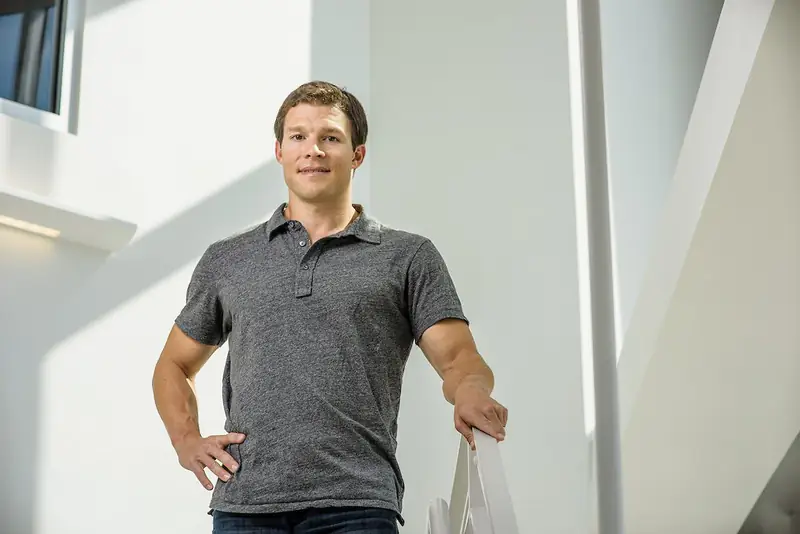
- Full name
- Brian Slingerland
- Profession
- Biotech entrepreneur; founder and CEO of Everest Detection; co-founder of Stemcentrx
- Nationality
- American
- Spouse
- Emily Slingerland
- Relationship
- Married
- Source of wealth
- Sale of Stemcentrx to AbbVie (2016); investment banking; Everest Detection
In this article
No reputable outlet has published a net worth figure for Brian Slingerland, so this page does not give one. His wealth comes mainly from one event: in 2016 AbbVie bought Stemcentrx, the cancer drug company he co-founded in 2008 and ran as CEO, for $5.8 billion up front in cash and stock, with up to $4 billion more tied to milestones, according to Fortune. He now runs Everest Detection, a company working on early cancer detection.
What Is Brian Slingerland's Net Worth?
Neither Forbes, Bloomberg nor any other outlet that tracks personal wealth has published an estimate for Slingerland, and his share of Stemcentrx at the time of the sale was never disclosed. Founders Fund was the company's largest outside investor, putting in about $300 million, and Fidelity and Sequoia Capital also held stakes, so the founders' share of the proceeds was split with a large group of backers.
One public record gives a small hint. In May 2016 the Federal Trade Commission granted early clearance under the Hart-Scott-Rodino Act for "Brian Slingerland and Emily Paige Adams" to acquire voting shares of AbbVie, according to the FTC's notice. A filing of this kind is needed only when a purchase of voting shares is above a federal size threshold, which is consistent with Slingerland receiving a large block of AbbVie stock in the deal. The notice does not say how many shares were involved.
Two later facts affect what that stake is worth. AbbVie paid most of the upfront price in its own stock, so the value depended on AbbVie's share price. And the milestone payments depended on Stemcentrx's lead drug succeeding, which it did not (see below).
Brian Slingerland's Yearly Earnings, Monthly Income and Salary
The old version of this page listed a yearly income of $320 million, a monthly income of $2.6 million and a daily income of $888,000. Those figures had no source and do not agree with each other, so they have been removed. It also described Everest Detection as an investment firm managing money for wealthy clients and, elsewhere, as a detector of explosives. Both descriptions were wrong: Everest Detection works on cancer tests.
Everest Detection is privately held and does not publish executive pay, so Slingerland's current salary is not known. His large payday came from the sale of Stemcentrx, not from a salary.
Early Life and Education
Slingerland grew up in Syracuse, New York, where he ran his own lawn-mowing business from age 10, he told Virginia Tech Magazine in 2016. He studied finance at Virginia Tech's Pamplin College of Business and graduated in 2000. In May 2016 he gave the keynote address at Pamplin's commencement.
The old page said he got an undergraduate degree at "LtdCalvin Christian School," a master's from an unnamed university, and an economics degree from Rutgers. None of that is supported by any source we found, and it has been replaced with the Virginia Tech record above. His exact age, height and weight have not been published.
Career: From Banker to Biotech Founder
Slingerland started in technology investment banking. MIT Technology Review described him as an up-and-coming tech banker at Credit Suisse in 2002, and he later worked at Goldman Sachs. He left Goldman in 2008, where Virginia Tech Magazine says he had become a managing director, to co-found two companies: the technology investment bank Qatalyst Partners, and Stemcentrx.
The idea for Stemcentrx came from a chance meeting. In 2002 Scott Dylla, then a Stanford postdoctoral researcher, answered Slingerland's ad for a room to rent in Palo Alto. They talked about cancer, which had killed two of Slingerland's aunts, and Dylla argued that the answer lay in targeting cancer stem cells, the rare cells thought to start and sustain tumors.
| Year | Milestone |
|---|---|
| 2000 | Graduates in finance from Virginia Tech |
| 2002 | Meets Scott Dylla in Palo Alto while working as a tech banker |
| 2008 | Leaves Goldman Sachs; co-founds Qatalyst Partners and Stemcentrx |
| 2012 | Founders Fund leads a $42 million round at about a $300 million valuation |
| 2015 | Stemcentrx raises $250 million led by Fidelity and presents its first clinical results |
| 2016 | AbbVie agrees to buy Stemcentrx for $5.8 billion up front plus up to $4 billion in milestones |
| 2019 | AbbVie drops the lead drug, Rova-T |
| 2019 | Founds Everest Detection |
Stemcentrx and the AbbVie Deal
Slingerland ran the business side as CEO while Dylla ran the science. The company kept a very low profile. By 2015, MIT Technology Review reported, it had 140 employees, three floors of offices next to the Genentech campus and its own drug manufacturing, and it had raised about $500 million from backers including Founders Fund, Sequoia Capital and Elon Musk. Founders Fund partner Brian Singerman wrote that Stemcentrx became the firm's largest investment, at $300 million, and its largest exit, in a post announcing the sale.
AbbVie announced the purchase on April 28, 2016. Fortune reported the terms as $2 billion in cash plus stock for a $5.8 billion upfront price, up to $4 billion more in milestone payments, and about $400 million of Stemcentrx cash returned to shareholders, for a total of roughly $10.2 billion. Fortune called it one of the five largest sales ever of a venture-backed company. Business Insider reported that the lead drug, rovalpituzumab tesirine (Rova-T), targeted small-cell lung cancer.
The science did not pay off for the buyer. In August 2019 the San Francisco Business Times reported that AbbVie had ended work on Rova-T, taken a $5.1 billion write-off on the deal and laid off nearly 200 people. That meant the milestone payments tied to the drug's success were very unlikely to be paid in full.
Everest Detection
Slingerland's current company, Everest Detection, is based in San Francisco and aims to detect cancer at its earliest and most curable stages. Its website points to lung cancer, where five-year survival is far better when the disease is found at stage I than at stage III, and says the company is working with sequencing, single-cell detection, microRNA and protein-based methods. Its LinkedIn profile lists Slingerland as founder and CEO since 2019. The company has not announced funding rounds, revenue or approved tests on its own site.
Wife and Family
The old page said Slingerland was married to someone named John Fehr and had three children. We found no source for either claim. In his 2016 commencement speech, as reported by Virginia Tech Magazine, Slingerland named his wife, Emily, as one of the people who encouraged him to start Stemcentrx, and the FTC notice lists him alongside Emily Paige Adams. We do not add further family details.
Net Worth Compared
Slingerland's path from banking to company founder resembles other finance-trained founders on this site, such as Alec Litowitz of Magnetar Capital and Andrew Farkas. You may also like our profiles of Brian Preston and Mo Siegel.
Why There Is No Reliable Estimate
A single company sale can make a founder very rich, but without knowing the founder's percentage, how much stock was sold later and what taxes were paid, no one can put a responsible number on it. Stemcentrx never published its ownership table, AbbVie's shares have moved a lot since 2016, and the milestone payments were tied to a drug that was dropped. Online figures such as "$50 to $70 million" come from sites that do not show their sources. We will add an estimate if a reputable outlet publishes one.
Frequently asked questions
What is Brian Slingerland's net worth?
No reputable outlet publishes a net worth figure for Brian Slingerland. His wealth comes mainly from co-founding Stemcentrx, which AbbVie bought in 2016 for $5.8 billion up front in cash and stock plus up to $4 billion in milestones. His ownership share was never disclosed, so the size of his payout is unknown.
What is Brian Slingerland's yearly income?
His salary is not public. He is founder and CEO of Everest Detection, a private cancer detection company that does not disclose executive pay. The $320 million yearly income that appears online has no source. Most of his wealth came from the 2016 sale of Stemcentrx rather than from a salary.
Who is Brian Slingerland's wife?
In his 2016 commencement speech at Virginia Tech, Slingerland named his wife, Emily, as one of the people who encouraged him to start Stemcentrx. A 2016 FTC notice lists him together with Emily Paige Adams. Claims online that he is married to someone named John Fehr have no source.
How old is Brian Slingerland?
His date of birth has not been published. He graduated from Virginia Tech with a finance degree in 2000 and was working as a technology banker by 2002, which suggests he was born in the late 1970s, but no reliable source gives his exact age.
What company did Brian Slingerland found?
He co-founded Stemcentrx in 2008 with scientist Scott Dylla and served as its CEO until AbbVie bought it in 2016. He also co-founded the tech investment bank Qatalyst Partners in 2008, and in 2019 he founded Everest Detection, which is developing tests to find cancer early.
How much did AbbVie pay for Stemcentrx?
AbbVie agreed in April 2016 to pay $5.8 billion up front, about $2 billion in cash and the rest in stock, plus up to $4 billion in milestone payments. Including cash returned to shareholders, Fortune put the total at about $10.2 billion. AbbVie later dropped the lead drug and wrote off $5.1 billion.
What does Everest Detection do?
Everest Detection is a San Francisco company that aims to detect cancer at its earliest, most treatable stages. Its website highlights lung cancer and describes work with sequencing, single-cell detection, microRNA and protein-based methods. Brian Slingerland founded it in 2019 and serves as CEO.
Follow Brian Slingerland
Sources
- Fortune: https://fortune.com/2016/04/28/abbvie-stemcentx/
- Virginia Tech Magazine: https://www.archive.vtmag.vt.edu/fall16/brian-slingerland.html
- MIT Technology Review: https://www.technologyreview.com/2015/09/08/166312/peter-thiel-backs-biotech-unicorn-fighting-cancer-stem-cells/
- Business Insider: https://www.businessinsider.com/stemcentrx-acquired-by-abbvie-2016-4
- San Francisco Business Times: https://www.bizjournals.com/sanfrancisco/news/2019/08/29/abbview-abbv-stemcentrx-rovalpituzumab-cancer.html
- Federal Trade Commission: https://www.ftc.gov/legal-library/browse/early-termination-notices/20161090
- Founders Fund (Brian Singerman): https://medium.com/@briansin/stemcentrx-abbvie-d0ba3dc51bd5
- Everest Detection: https://everestdetection.com/